
October 9, 2026 · 5 min read
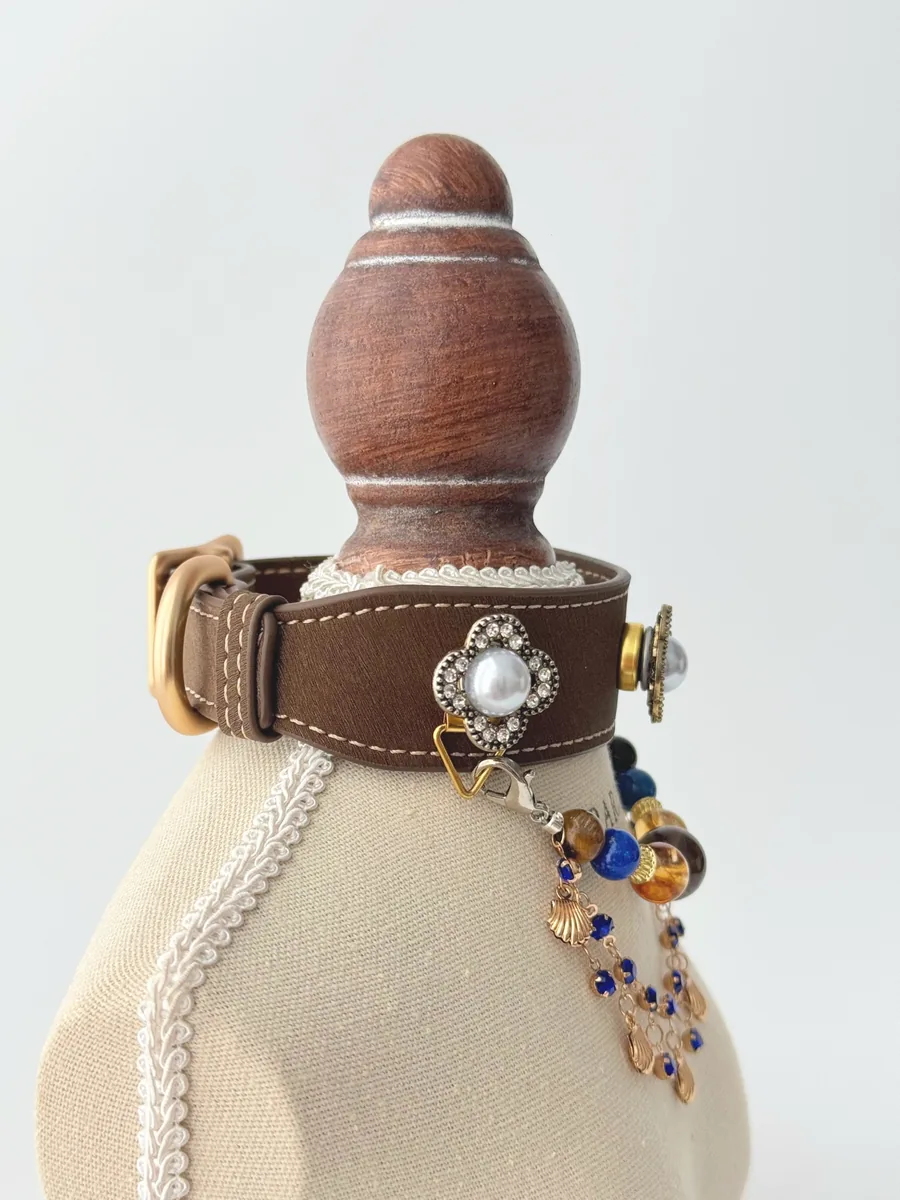
Decorating the animals we love is not a modern idea — it might be one of the oldest ideas. Beads, charms and bands appear beside companion animals in cultures across the map, often carrying meanings bigger than decoration. Here is the short version of a long story.
Records and archaeology from several ancient cultures — Egypt among them — suggest that prized animals wore collars, beads and protective amulets. The logic then is familiar now: this animal matters, and what they wear should say so. Leatherwork and bead craft made collars practical and expressive almost as long as pets have walked beside people.
In the 1800s, pet keeping moved indoors and upmarket — and with it arrived accessorizing. Painted portraits and photographs from the era show pets wearing decorative collars, bells and charms. The charm-bracelet habit that ran through European jewelry had found an obvious second home.
The craft movements of the twentieth century brought beads back to center: art fairs, friendship-bracelet summers, and the first wave of handmade studios stringing pet collars by hand in kitchens and craft rooms. The idea that survived all of it: a collar can be everyday equipment and a small piece of jewelry at once.
That is the tradition BABEPOP PET works in — hand-strung crystal strands on adjustable vegan leather, built to order, engraved with a name. Some of the stones carry meanings older than the pyramids; the engraving font is a modern invention. Both arrive on the same strand. Our story of why handmade matters is the modern chapter.
The oldest accessory, freshly strung for one good pet.